Key Takeaways
- ✅
Glasnevin Cemetery is the burial place of Michael Collins, Daniel O'Connell, and other Irish leaders.
- ✅
A round tower marks the spot where Daniel O'Connel's tomb is located.
- ✅
Glasnevin cemetery possesses over 1.5 million Irish genealogy records from 1832 to present.
Looking for things to do in Dublin that brings Ireland’s past vividly to life?, local expert, Deirdre, highly recommends checking out the Glasnevin Cemetery Tour.
Glasnevin Cemetery At A Glance
- 🪦 Glasnevin Cemetery Tour
- ☘️ Tracing Irish Family Roots
- 🍺 Visit Grave Diggers Pub
- 🗺️ How To Get To Glasnevin Cemetery?
How's it going, I'm Deirdre 👋
As General Manager with Vagabond Tours — not to mention a native-born Dubliner — a question that I'm get asked quite frequently is, what should I do before my tour in Ireland's capital city?
Well, here's the answer; the Glasnevin Cemetery Tour.
On a Glasnevin Cemetery tour, you’ll uncover powerful stories, explore beautifully kept grounds and gain a deeper understanding of Irish history that you simply won’t get from a guidebook.
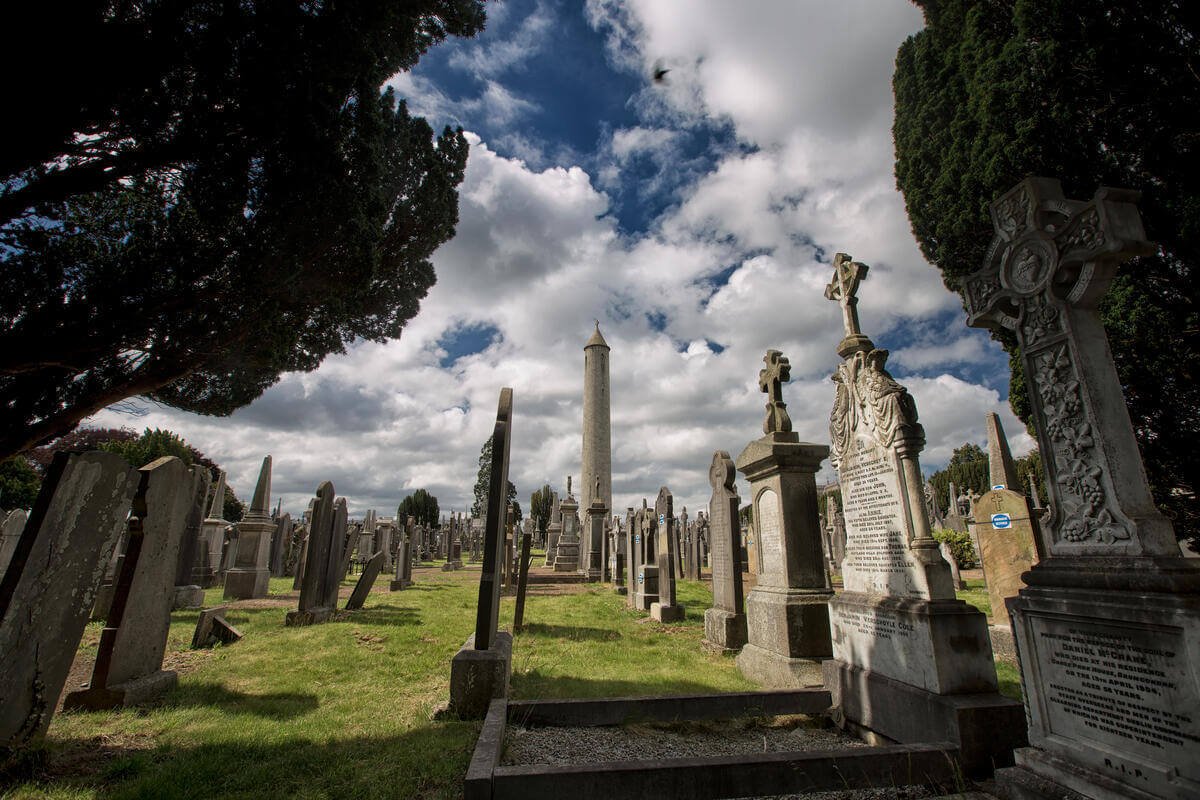
Glasnevin Cemetery, located north of Dublin City centre, is the final resting place of over 1.5 million Dubliners. There are more people interred there than actually live in Dublin today, believe it or not.
Rich and poor, famous and forgotten; the cemetery has borne witness to the life and times that have shaped Ireland since the mid-1800s. This makes it a must for history buffs and those wishing to trace some family history.
Read on, intrepid Dublin explorer, for my personal guide to one of Dublin's hidden gems.
Why Do A Glasnevin Cemetery Tour?
First things first, I know what you're thinking... Why would I visit a cemetery in Dublin City while on my holiday?
A visit to Glasnevin Cemetery Dublin is far more than a stroll through a graveyard. It’s one of the most enriching things to do in Dublin for travellers interested in history, culture and storytelling.
Irish history buffs will love learning the life stories behind some of the famous Irish men and women who found their final resting place at Glasnevin.
Here are three such examples:
Daniel O'Connell
Daniel O'Connell is one of the father figures of the Irish independence movement.
He successfully campaigned for the rights of disenfranchised Catholics in early 19th century Ireland. O'Connell Street in central Dublin is named in his honour.
In 1831, the organisation that Daniel O'Connell led, bought lands in the north Dublin suburb of Glasnevin to construct a cemetery that would accommodate all religions.
Prior to that point, Catholic families were forced to bury their dead at Bully's Acre, in Kilmainham.
The new cemetery opened in 1832. The first burial to take place was 11-year-old Michael Carey from Dublin.
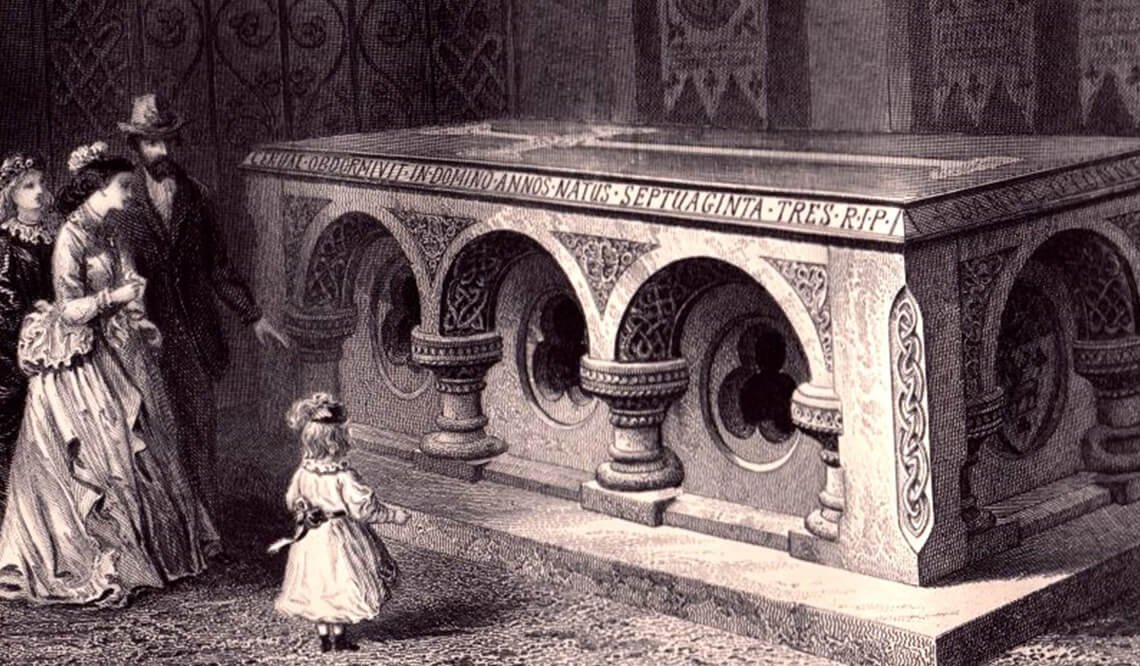
Daniel O'Connell died in 1847 and is interred at Glasnevin. A round tower marks the spot where his tomb is located. On the inside of the crypt, the marble wall is marked with a message "my body to Ireland, my heart to Rome". This was O'Connell's final request before he passed away in Genoa, Italy while on a pilgrimage to Rome. His heart is buried in the Irish College in Rome and his body was returned to Dublin.
Michael Collins
Revolutionary. Politician. Charmer. Orator. Diplomat.
Michael Collins was a famous figure during Ireland's early 20th century revolutionary independence era.
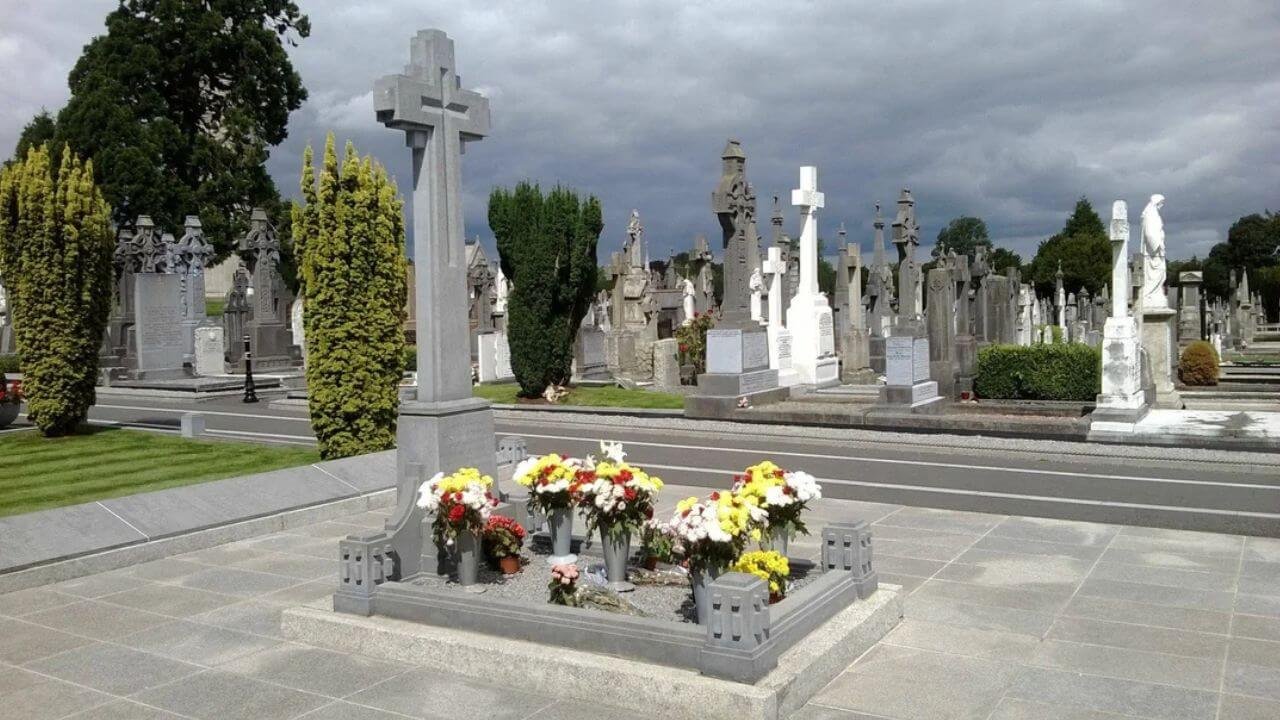
In fact, Collins' grave at Glasnevin remains a place of active pilgrimage. Even to this day, it is still adorned with fresh flowers and cards.
Collins played a pivotal part in the Irish War of Independence (1918 to 1921). He led Irish military efforts and pioneered guerrilla warfare to combat the overwhelming advantages held by the British army.
When a truce was agreed in 1921, Collins led the Irish delegation to London to negotiate. Collins agreed a treaty whereby 26 out of 32 Irish counties would become independent.
This effectively partitioned the island of Ireland into two states. Northern Ireland would remain as part of the United Kingdom. The partition caused a split in the Irish Provisional government resulting in a civil war.
After signing the treaty Collins is reported to have said:
"I may have signed my actual death warrant".
This turned out to be true.
In August 1922, Michael Collins was shot dead in an ambush in Béal na Bláth, Cork.
Half a million people attended his funeral in Dublin; representing a staggering fifth of the population of Ireland at the time.
Eamon de Valera
One of the most significant figures you’ll encounter on a Glasnevin Cemetery tour is Éamon de Valera, a central leader in Ireland’s journey to independence and a former Taoiseach and President of Ireland.
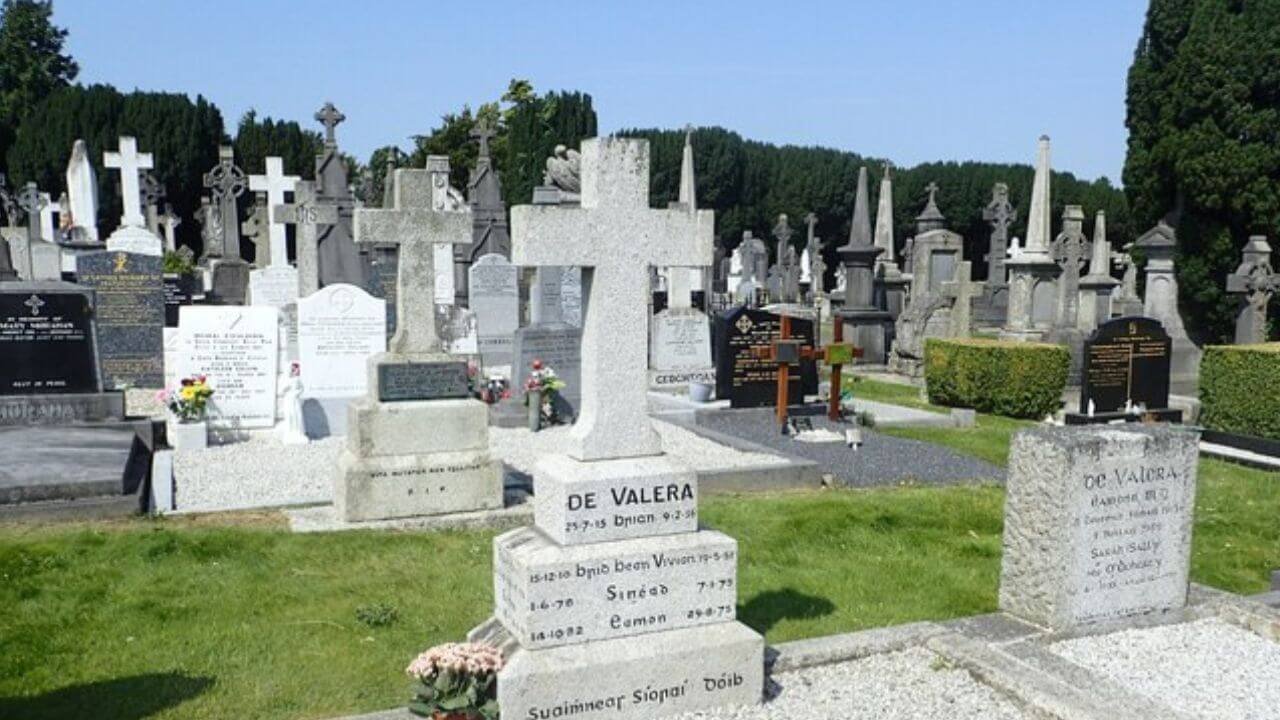
De Valera passed away in 1975, where his grave is now a place of quiet reflection within Glasnevin Cemetery Dublin, drawing visitors interested in the political and cultural history of the nation.
During a guided Dublin cemetery tour, you’ll learn about de Valera’s role in shaping modern Ireland, from the Easter Rising to his decades-long influence on Irish politics.
The Irish War of Independence
In August 1915 an event occurred in Glasnevin cemetery that would influence the course of Irish history.
At the burial of Jeremiah O'Donovan Rossa, Pádraig Pearse, gave a rousing speech that was, in fact, a coded call to arms.
"But the fools, the fools, the fools! they have left us our Fenian dead, and while Ireland holds these graves, Ireland unfree shall never be at peace.".
Less than a year later, an insurgency in an attempt to overthrow British rule would follow.
This became known as the Easter Rising. It was a failure and Pádraig Pearse, along with his fellow leaders of the Rising, was executed by firing squad.
Initially the Rising had little public support. With the martyrdom of the rebels, public opinion would change in favour of overthrowing British rule and a war for independence ensued. The end result was Irish Independence in 1922.
Trace Your Family History
Glasnevin cemetery possesses over 1.5 million Irish genealogy records from 1832 to present.
If you intend tracing your Irish family history, Glasnevin is a great place to start.
Besides having a fantastic archive online, Glasnevin Cemetery offers assistance when you visit.
If you end up taking a tour with them, they'll also give you free genealogy credits that you can redeem there.
Who knows, you may discover some interesting stories from your family's past.
An interesting feature of Glasnevin Cemetery is the high perimeter wall with integrated lookout towers.
Why would a cemetery need this level of security? Body snatching had become a serious problem in Dublin around the period when Glasnevin was being planned.
Find out more about tracing your irish roots.
 John Kavanagh's - Grave Diggers Pub
No Glasnevin Cemetery tour is complete without a visit to the legendary John Kavanagh’s pub, better known as “The Gravediggers”.
Located just beside Glasnevin Cemetery Dublin, this historic pub has been serving locals since 1833 and is famously linked to the cemetery’s past. Gravediggers would once pop in for a quiet pint after a day’s work, giving the pub its unforgettable nickname.
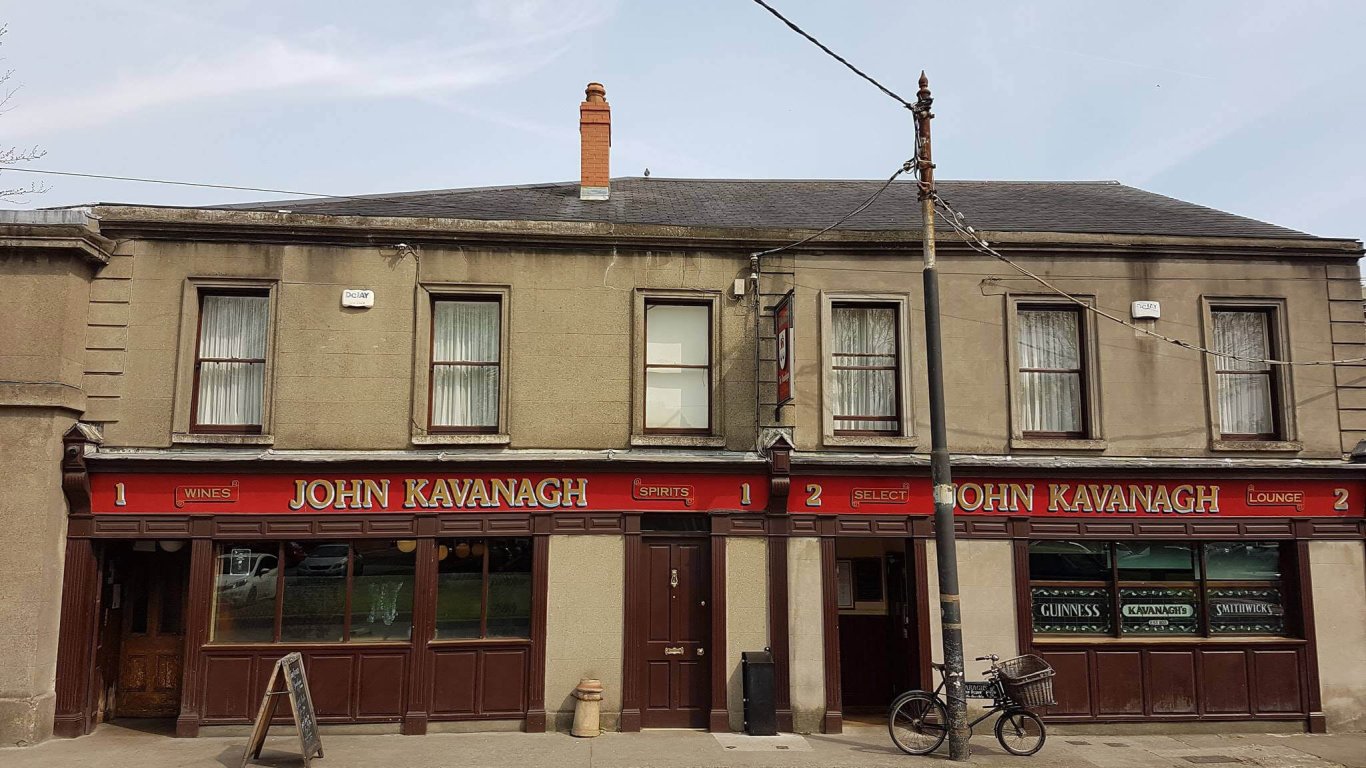
If you’re looking for things to do in Dublin, this iconic spot adds a warm, local flavour to your visit and a perfect place to reflect after uncovering the stories of Ireland’s most famous graves.
Check out some more of the best pubs in Dublin.
Getting To Glasnevin
The number 4, 9, 11 & 13 Dublin buses frequently g from OConnell Street in the city centre out towards Glasnevin Cemetery.
Learn more about the Irelands best cities here.