Hey guys, It’s Conor here, Vagabond’s resident sports guru 👋
Ireland is a fairly sports mad country, with fans supporting sports from all over the world such as soccer, rugby, golf, basketball and much more.
What many people outside of Ireland don't know is that we have our very own Irish sports.
The most popular sports in Ireland are Hurling and Gaelic Football. While they are enjoyed by people across Ireland, they have also been recognized abroad too and they're continuing to grow in popularity.
This blog will give you an insight into the history of these games, how they are played, and it will give you a great insight into it's importance of Irish culture.
Read on to learn more about the most popular sports in Ireland.
☘️ A Brief History Of Irish Sports
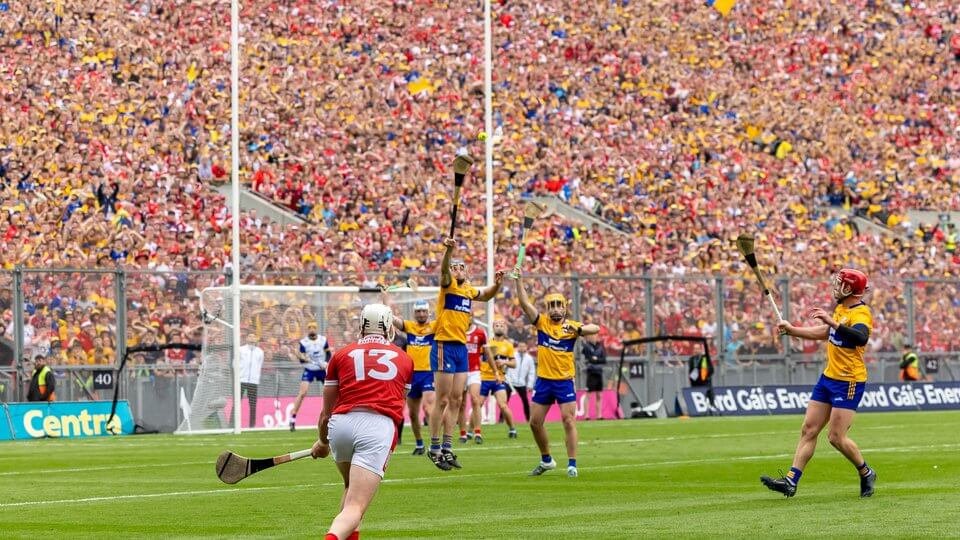
In Ancient Ireland, there was an Irish version of the Olympic games known as the Tailteann Games. These were played at the beginning of the Autumn and involved chariot racing, wrestling, great feats of strength, and the earliest forms of Gaelic Football and Hurling.
The Founding Of The GAA
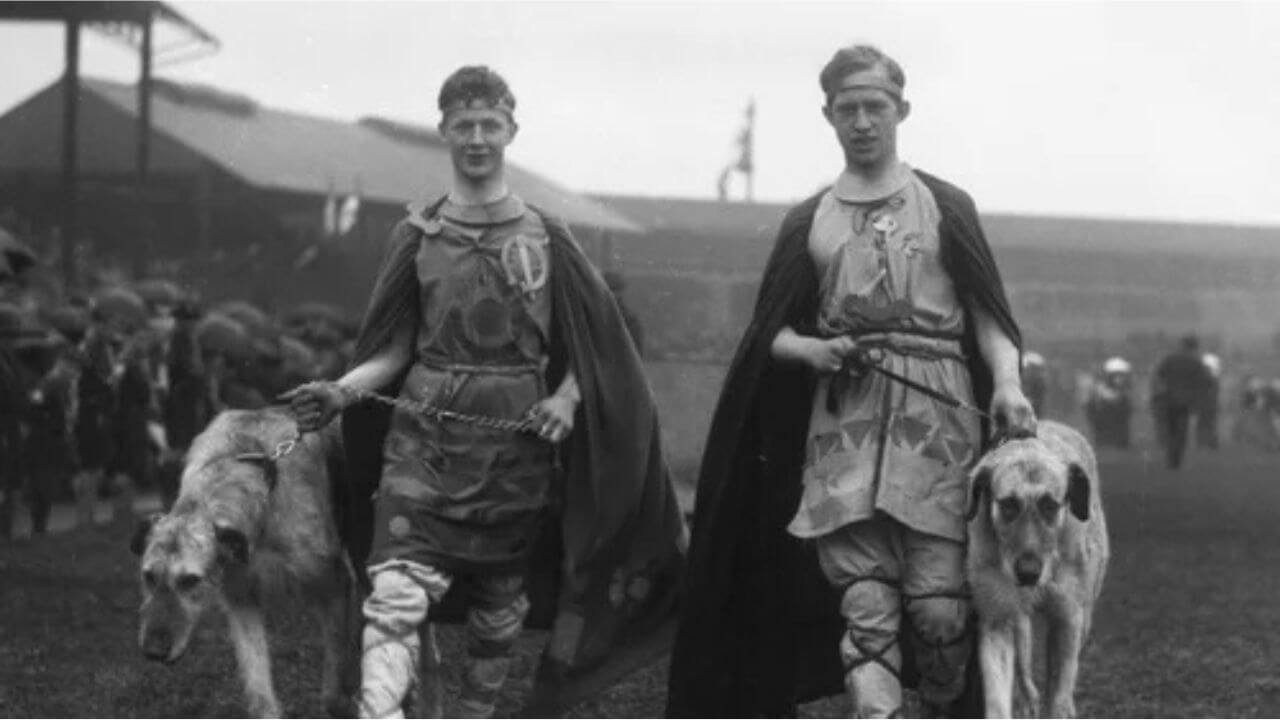
In Hayes Hotel in Thurles, County Tipperary, the Gaelic Athletic Association was founded for the preservation and cultivation of our national pastimes. As well as this, they also organized competitions for both Gaelic Football and Hurling. A key figure in the founding the GAA was Michael Cusack who has a statue outside the Cusack stand in Croke Park
The very first All-Ireland Gaelic Football and Hurling Championships took place in 1887. In 1925, the very first National Football League and National Hurling Leagues were played.
Croke Park, Home Of The GAA
The home of the GAA in Ireland is Croke Park Stadium, in Dublin. With a max capacity of 82,300, it is the 4th largest stadium in Europe. It opened in 1880 and was known as the Jones Road Athletic Ground.
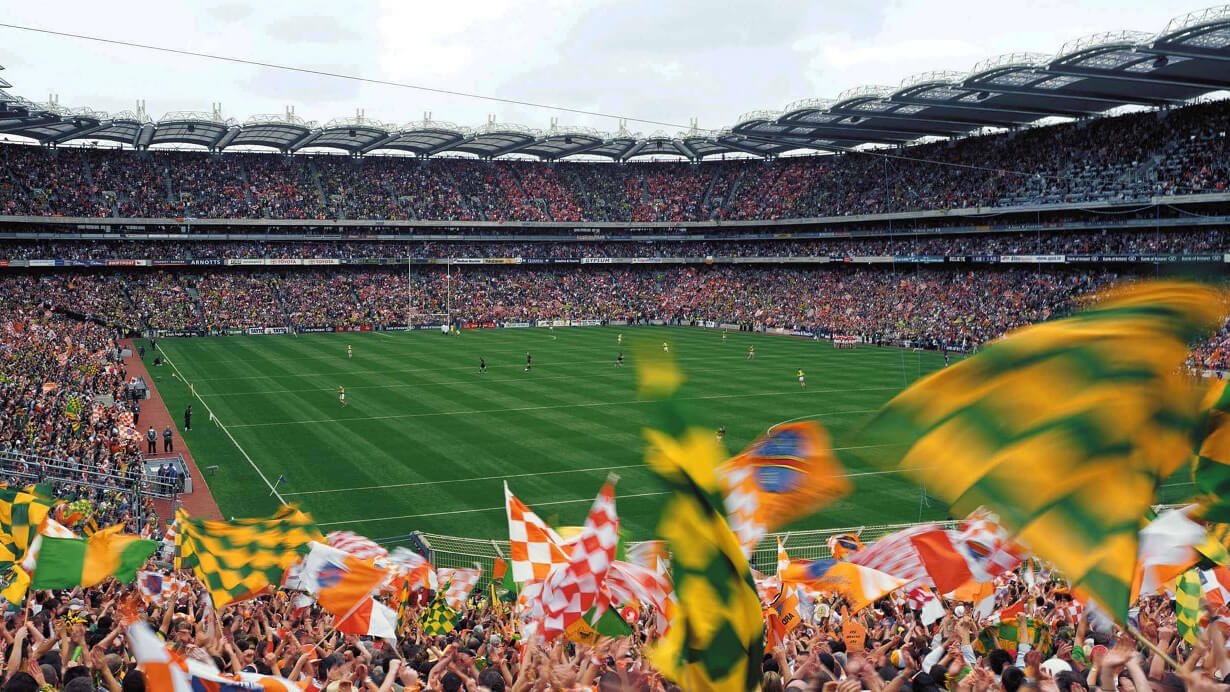
It came into the exclusive ownership of the GAA in 1913. Back then, it only had one main stand, and three grassy banks on the other three sides. In 1915, a terrace was built behind one of the goals and was known as Hill 60, named after a battle in the Gallipoli campaign of the First World War. This terrace was renamed Hill 16 in honour of the leaders of the Easter Rising of 1916.
The Hogan Stand was built in 1924, and the Cusack Stand was built in 1927. 1949 saw the construction of what is known today as the Davin Stand but was originally known as the Canal End due its proximity to the Royal Canal. 1952 saw the construction of the Nally End, beside Hill 16. Upgrades between 1994 and 2005 have brought the stadium up to what it is today.
Bloody Sunday, 1920
On of the darkest days in the history of the GAA took place on Sunday November 21st 1920. At the time, Ireland was in the middle of its War of Independence against Great Britain.
On the morning of Sunday November 21st, 15 British agents were assassinated in Dublin City Centre by members of the elite IRA unit known as The Squad, a unit of the Irish Republican Army founded by their Director of Intelligence, Michael Collins.
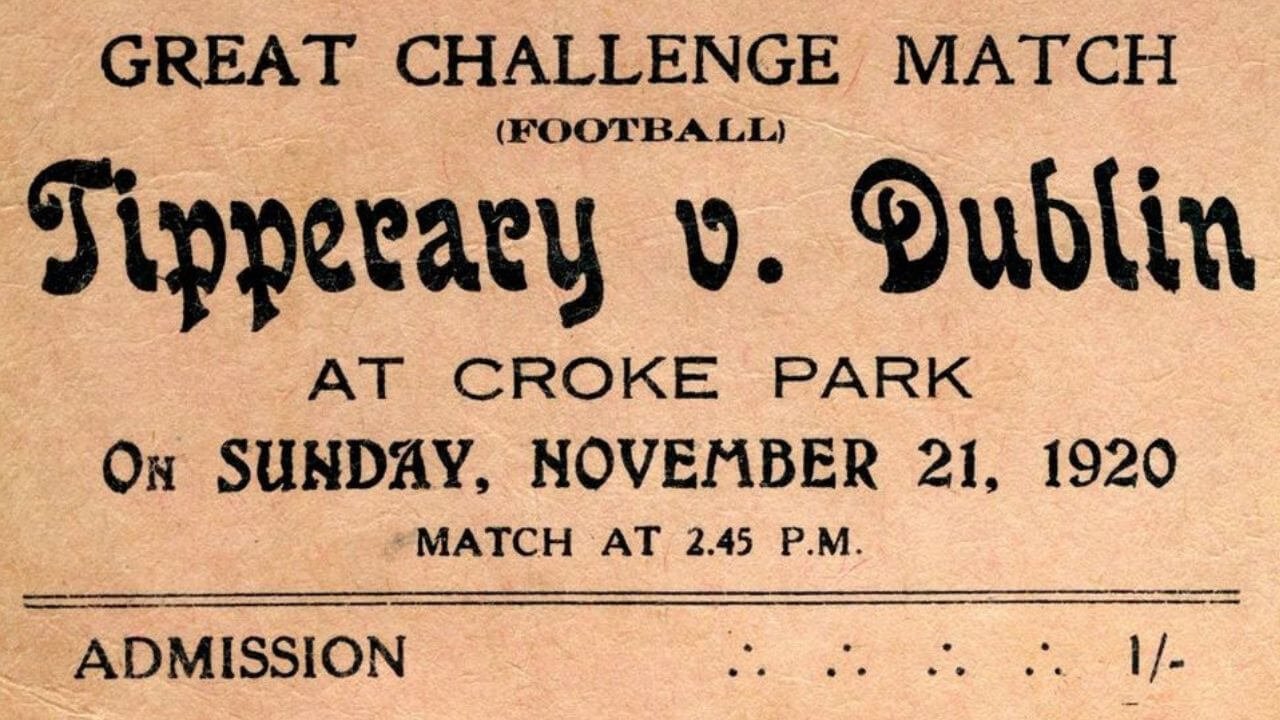 That afternoon, a Gaelic Football match was taking place between Tipperary and Dublin in Croke Park. Five minutes into the match, a British aeroplane circled twice overhead and shot a red flare. A mixed force of Royal Irish Constabulary, Auxiliaries, and Military, stormed the grounds and opened fire. 14 people were killed, and anywhere between 60 to 100 were injured. One of those killed was Tipperary footballer, Michael Hogan.
The Hogan Stand in Croke Park is named after him. The events of November 21st, 1920, are known in Ireland as Bloody Sunday. To this day, a commemoration ceremony takes place in Croke Park on or near the date of November 21st to the mark this sad event in Irish history.
🏐 What Is Gaelic Football?
If you combine a bit rugby, soccer, basketball, American Football and Australian Rules together, you’ll get Gaelic Football.
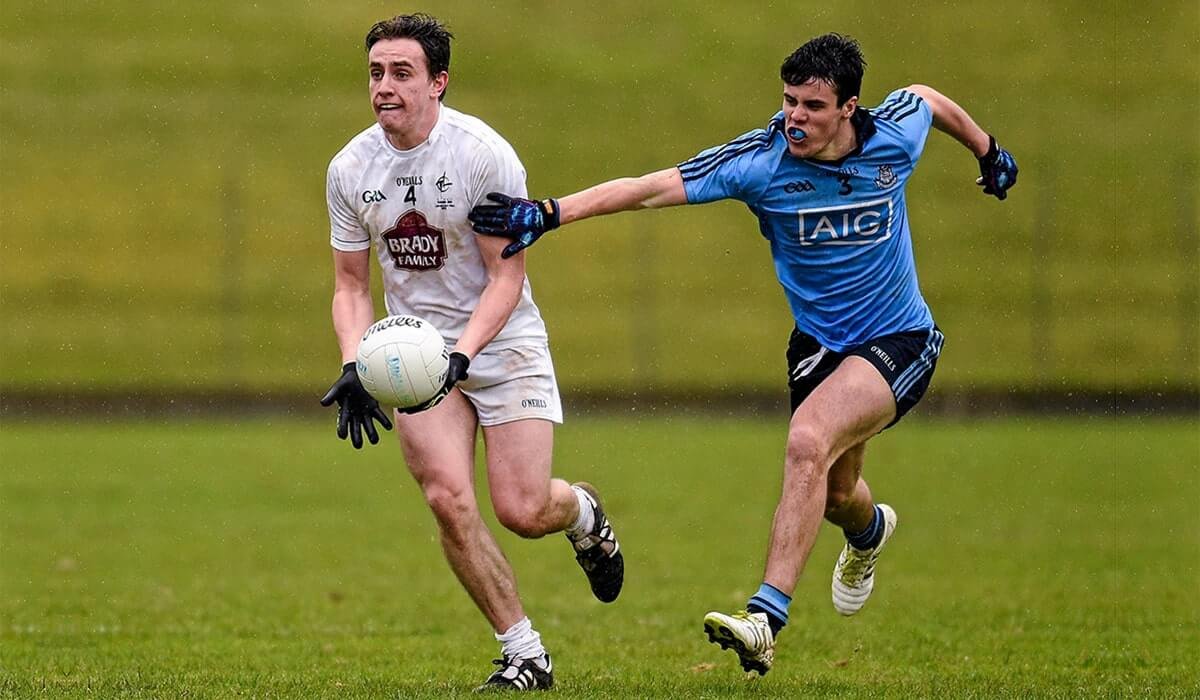 The earliest type of Gaelic Football was known as “Caid” and it may well date back as far as the Middle Ages. There is a reference to football being played in Dublin in 1308. In 1527, there is a ruling from the Statutes of Galway which allowed the playing of “foot balle”. And in the year 1670, we find the earliest references to something that resembles Gaelic Football, when a game allowing catching and kicking a ball was permitted. In the year 1884, the game was codified with the founding of the GAA.
🏑 What Is Hurling?
Take cricket, baseball, hockey, lacrosse and ancient warfare, and you get the Irish sport of hurling!
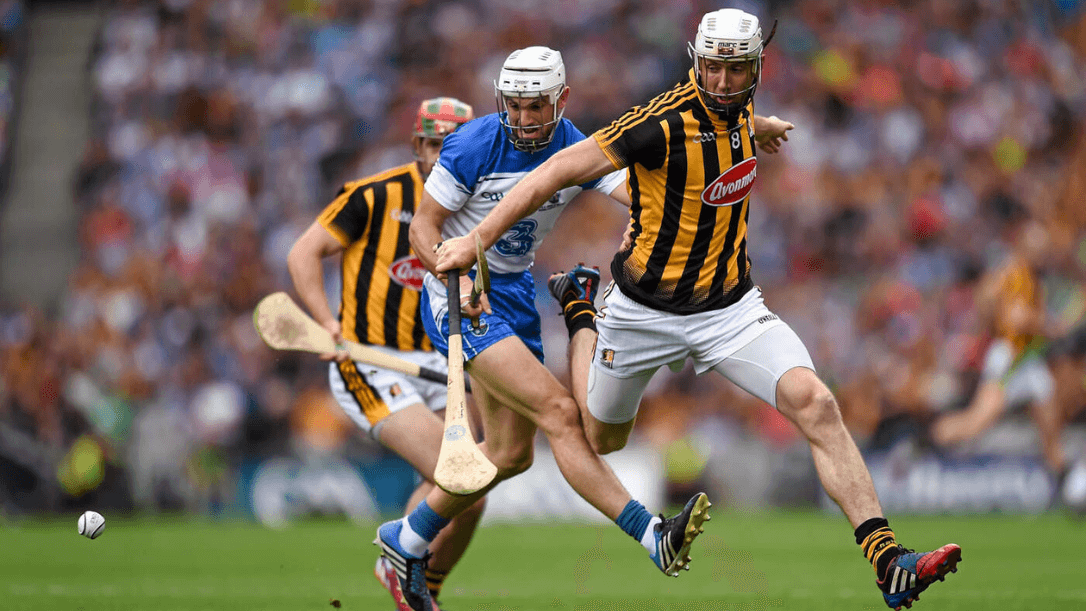 Hurling is probably one of the oldest games in Ireland. In Bronze Age and Iron Age Ireland (2,500 BC to approximately 500 AD) it was played by young boys who were training to be warriors. And the earliest archaeological records we have of hurling date to the 12th century, over 800 years ago!
In the year 1366, the Statutes of Kilkenny banned the playing of hurling due to its violent nature! A 15th century grave slab from the Inishowen Peninsula in County Donegal, depicts a Scottish warrior with a sword, a stick that resembles a hurling stick, and a hurling ball! The same Statutes of Galway from 1527, which allowed the playing of Gaelic Football, forbid the playing of hurling!
Just like Gaelic Football, the rules for hurling were codified with the founding of the GAA.
🚨 What Are The Rules For Gaelic Football & Hurling?
One of great things about gaelic football and hurling is that they both play on the same type of pitch with the same type of goalposts, which means you can have a gaelic football match immediately after a Hurling match, and vice versa. A lot of GAA clubs in Ireland would share their pitches for their gaelic football and hurling teams.
A GAA pitch is a rectangular shaped field like a soccer or rugby pitch, with rugby type goalposts. The minimum length is 130 meters, and the maximum length is 145 meters. 80 meters is the minimum width, and 90 meters is the maximum width. The goalposts are 6.5 meters wide and have a crossbar 2.5 meters off the ground. There is a net dropping down from the crossbar too. The posts total height is a minimum of 7 meters, although some goalposts in stadia extend to 11 meters!
The start of a Gaelic Football or Hurling match is called the “Throw-in”.The start of a Gaelic Football or Hurling match is called the “Throw-in”.
In Gaelic Football, the referee throws the ball up between two players, and in Hurling, the referee rolls the ball in between four players (two players from each team).
Like most sports, the objective of the game is to score more points than your opponent. If you put the ball into net, that is a goal which awards 3 points. If you put the ball over the bar and in between the posts, then you are awarded 1 point. Gaelic Football offers a 2-point score if you put the ball over the bar and in between the posts from at least 40 meters from the goals. If the defending team deflects the attacking teams’ ball wide, then the attacking team is awarded a 65 in hurling, or a 45 in Gaelic Football. This gives them another chance to score. A 65 is taken from a line 65 meters away from goal, and a 45 is taken from the line 45 meters away from goal. If a foul is committed in the large rectangle in front of the goals, then a penalty is awarded. In Gaelic Football, the penalty is taken from 11 meters out, and in Hurling it is taken from 20 meters out. After a goal or point is scored, the game restarts with the defending team goalkeeper in possession of the ball. Gaelic Football and Hurling is a 60-minute match at club, minor (under 18s) and underage games, with two halves. For senior intercounty matches, they are 70 minutes long, with two halves of 35 minutes each. Depending on the competition, if the game ends in a draw, extra time may be played, with the potential for penalties. Or a replay might be played instead.
What is used in Gaelic Football & Hurling?
Gaelic:
Gaelic Football resembles soccer and rugby in that all players wear football boots, and some outfield players wear gloves. Goalkeepers nearly always wear gloves like a goalkeeper in soccer. Due to the colder weather in Ireland, goalkeepers sometimes wear base layers under their jerseys and shorts for warmth. This also provides with a bit of protection when blocking the ball.
Hurling:
In Hurling, there is a bit more equipment required. All players wear boots, the same as Gaelic Football, but players don’t tend to wear gloves. Some might wear one glove on their dominant hand for extra grip.
Since 2010, all hurling players must wear a helmet. Until 2010, only those under the age of 18 were required to wear them! The stick used in hurling is called a hurl, or a hurley, it depends where you are from. A poll held in 2020 saw 52 percent of Irish counties use the term “hurl” instead of “hurley”. In Irish, it is known as a camán. Traditionally, these sticks were made from ash trees, one of the strongest trees in Ireland. However, since 2020, bamboo has been used to make some of them due to the presence of ash dieback in Ireland. Goalkeepers tend to use hurls with a larger bas. This is the wider part of the stick, and they use larger ones because they are trying to save the ball when it is hit towards goal! When another player’s hurl strikes another hurl, this is known as “The Clash of the Ash”. As a result, some hurls break on impact, so it is not uncommon for players to bring multiple hurls with them to matches. A backroom staff member will usually patrol the sidelines and throw in a new hurl if a player breaks theirs! Not too different to a squire giving his knight a new weapon in battle!